
If you have ever needed foundation support or stabilization, you might have heard of helical piers. They have become increasingly popular over the last several years because of their flexibility, low environmental impact, and cost-effectiveness. Sometimes called “screw piles,” helical piers are foundational supports that have been used in construction for over 100 years. They’re a popular alternative to traditional concrete because of their ease of installation, versatility, and low environmental impact.
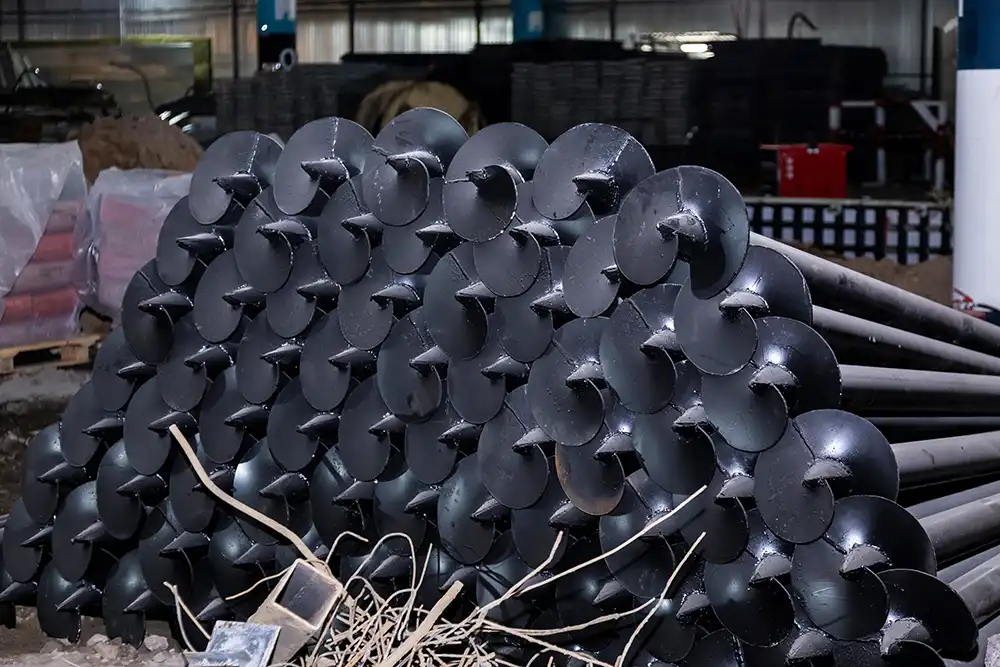
Helical piers are made of a steel shaft with helical plates that are welded to the shaft. These plates (which are also referred to as “helices”) are what make helical piers so unique and effective, while the helices allow the pier to be screwed into the soil (similar to a screwdriver turning a screw). Helical piers can be used in a number of applications — from residential and commercial homes to bridges and lighthouses. They can also be used in both new construction and retrofitting projects, which makes them a great choice for any type of foundation.
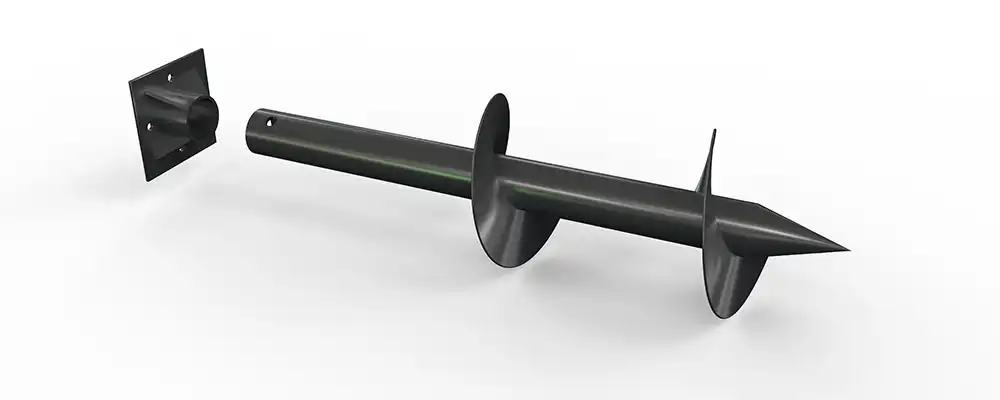
Parts of Helical Piers
Helical piers are usually made up of three parts, which include the following:
- The Shaft — The long steel shaft that’s screwed into the soil and can be either round or square. The shaft is usually manufactured in section lengths of 5-7 feet, which are bolted together.
- The Helix — A circular plate that’s welded to the lead section of the shaft. The size and number of helices being used will depend on the load that the pier needs to bear.
- The Bracket — This is what connects the pier to the structure that requires support. It can be customized to fit the size and shape of the structure.
The materials used to make helical piers are carefully chosen to make sure they’re as strong and durable as possible. The steel that’s used in the shaft is usually made up of a strong alloy that can withstand the weight of the structure that it needs to support. The helices are also made of steel, with their size and shape being carefully chosen to provide the necessary support (all while minimizing the impact they have on the surrounding soil).
How Helical Piers Work
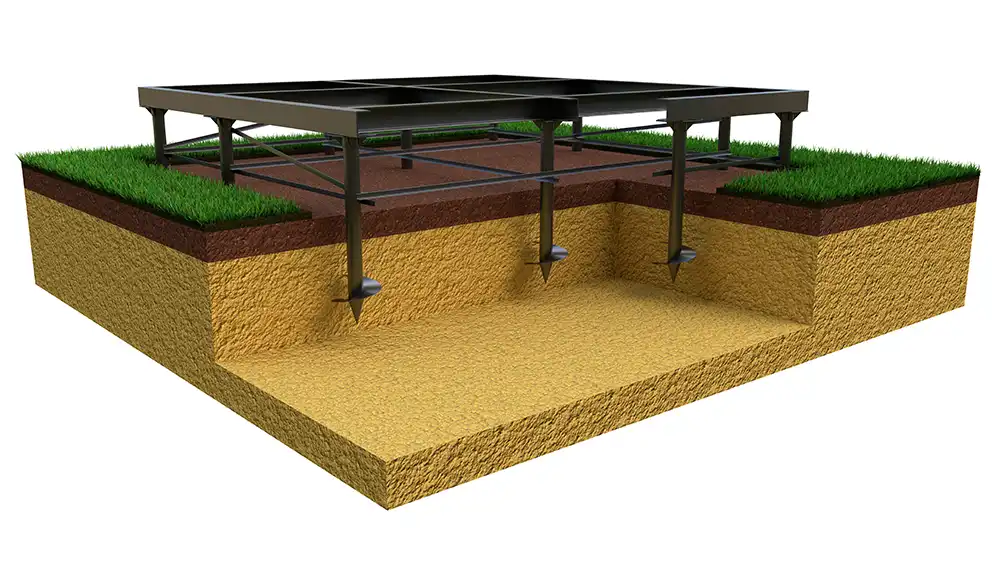
Helical piers work by using the strength and stability of the soil. The helices at the section of the shaft have a larger surface area than the shaft itself, which allows them to distribute the load of the structure over a larger area of the soil. This results in a deeper and more stable foundation. Helical piers can also be installed quickly without the use of larger machinery and without causing a significant disruption to the surrounding area.
Aside from their strength and stability, helical piers have a number of other benefits. They’re resistant to corrosion, so they can last for decades without the need for a replacement. They’re also environmentally friendly, because they don’t require the use of heavy machinery or the excavation of large amounts of soil.
Advantages of Using Helical Piers
Some of the advantages of using helical piers include the following:
- Speed and Efficiency — This is one of the biggest advantages of helical piers. Unlike traditional foundations (such as timber piles, drilled shafts, or driven concrete piles), helical piers can usually be installed more quickly.
- Minimal Environmental Impact — Traditional foundation supports often require the use of heavy machinery and excavation to install, which can damage or disturb the surrounding landscape. But helical piers can be installed with the use of more lightweight equipment, which reduces the damage or disturbance of the surrounding landscape.
- Cost-Effectiveness — Because they don’t require as much labor and equipment to install, they’re a more cost-effective alternative to traditional foundation supports They can also be installed in almost any type of weather conditions, which allows for more flexibility in scheduling and a reduced risk for delays or unexpected costs.
- Versatility in Various Soil Conditions — Helical piers can be installed in a variety of soil conditions (including clay and dense sand). They can also be installed on slopes or in areas with limited access, which makes them a versatile option for a number of applications.
- Load-Bearing Capacity — Helical piers have a significant amount of load-bearing capacity, which makes them suitable for a variety of structures. They can bear both horizontal and vertical loads. They can also support structures in areas with high water tables and more challenging soil conditions.
The condition of the surrounding soil can have a huge impact on your foundation. Too much moisture can cause the soil to expand, and the extra pressure can cause your foundation to heave on one side. If the soil loses moisture, it will contract (which can cause your foundation to sink or settle). In both of these situations, helical piers can restore and protect your home’s foundation.
Here are some common questions people ask about helical piers.
Helical piers are large steel shafts with helical plates that are attached at even intervals. They look like enormous screws, which is why they’re often referred to as “screw piles.” A foundation repair company will use hydraulic equipment to push the piers deep into the ground.
Helical piers can reach beyond the upper layers of the soil to where they reach the bedrock. The added depth will compensate for any moisture issues that are affecting your foundation, and they have enough load-bearing capacity to support any home. They can also lift a sinking or heaving foundation (in addition to the long-term support).
Helical piers can solve a number of issues caused by a sinking or heaving foundation. Not only will you be able to repair cracks in your interior and basement walls, but you’ll also be able to fix any slants in your floor. Lifting your foundation will force your window and door frames back together, which will take care of any issues you had in opening or closing them.
Once a foundation repair contractor installs them with the correct load capacity, you can expect helical piers to last for 120 years. But in many cases, they can last even longer.
A helical pier installation takes place in five basic steps, but the time it takes to complete each one will depend on the condition of your foundation. It will also depend on the grade of the soil, features of the property, and a number of other considerations.
Here are the five steps involved in a helical pier installation:
Home Inspection — This involves an examination of your foundation’s condition, but it will also involve an evaluation of any damage to the rest of your home. Many conditions (such as sloping floors or windows and doors that have been separated) can be caused by a shifting foundation.
Installation Prep Work — This will involve taking measurements and using painter’s tape to mark your home. The contractor will install helical piers every six feet. At each location, the installation crew will excavate holes measuring three feet by three feet to a depth of 18-24 inches (or until the footing is exposed).
Helical Pier Installation — The crew will use torque motors that are designed to screw the piers into the soil. The piers will get driven down until there’s enough resistance from the bedrock.
Lifting and Stabilizing the Foundation — Once the piers have been installed, it’s time to lift your foundation. In ideal circumstances, the piers should be able to lift your foundation to its original position. But if it can’t be done without causing additional foundation damage, the torque on the piers will lift your foundation as close to its original position as possible.
Final Inspection and Walkthrough — Once the installation has been completed, the foundation repair contractor will perform a visual inspection of the cracks in your foundation, walls, and all the other surfaces of your home. The contractor will also take floor measurements to make sure the piers have been restored to the proper elevation and leveling.
Be sure to speak to a foundation repair specialist for more information.
A number of factors can determine the cost of a helical pier installation. Some of them include the following:
The site’s location.
The type of structure.
The scope of work.
The condition of the foundation.
The depth of the pile installation.
Be sure to speak to a professional for more information.
Helical piers are designed to support any load that’s required. They can also be installed as pier groups or arrays (depending on the amount of support is required and how much of it is being provided by the surrounding soil).
If you’re looking for one of the best places for foundation repair in Corpus Christi, be sure to get in touch with Streem Foundation Repair.