
Every building project is different, so the structural support often needs a unique but robust configuration. Many factors can come into play as the most appropriate foundation repair method is determined. They will also determine if helical piers will be the most effective way to complete the repair. Helical piers are an effective and affordable way to protect and stabilize a home’s foundation, which is why they’re the choice for many engineers (whether it’s for a residential, industrial, or commercial property).
Here are some of the common applications for helical piers.
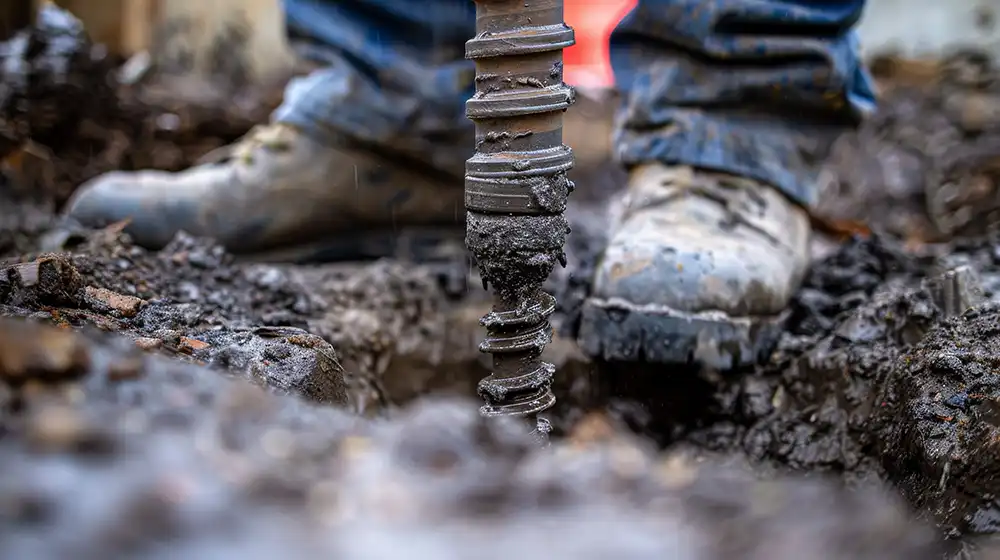
#1: Helical Pier Building Foundations
This is the most common application for helical piers. It’s cheaper than a concrete foundation, and it doesn’t require any excavation. The installation process is quick and can be loaded immediately, because you don’t have to wait for the concrete foundation to cure.
#2: Dock and Pier Foundations
Helical pier dock foundations are reliable systems for marine-based structures. Dock and pier foundations are durable, and they can last up to 50 years (which is why it’s a great choice for saltwater pier and deck constructions.
#3: Helical Deck Foundations
This is the most stable foundation option for decks, especially large ones. Deck foundations made of helical piers can be built more quickly while causing minimal damage to the ground and any surrounding areas.
#4: Solar Panel Foundations
Solar farms are becoming increasingly common. Because helical foundation systems don’t require the use of concrete, they can be loaded immediately. They can even help with wind load and uplift, which is an advantage for these types of installations.
#5: Agricultural Foundations
Agricultural foundations can be large, and they usually have a lot of wind load. Helical piers are designed to hold the structure to the ground (all while providing the right amount of support).
#6: Helical Sign Foundations
One of the most common applications for helical piers is the foundation for a building billboard sign, because they can help with the wind loads they often have to endure.
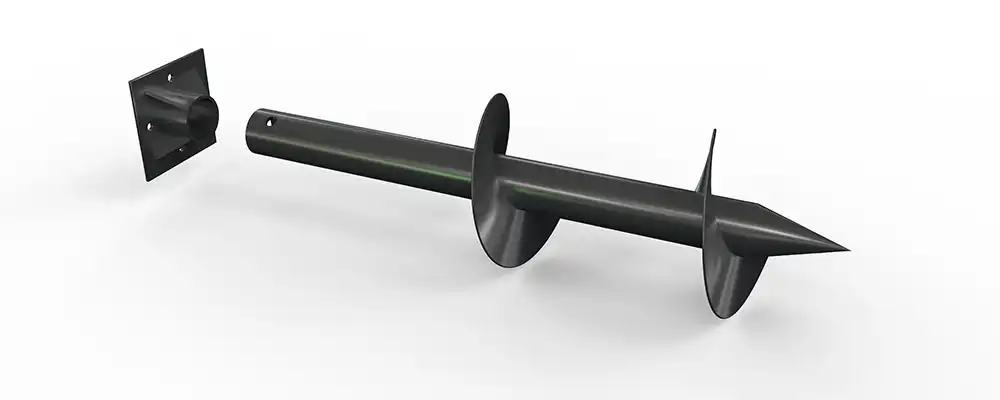
#7: Tower Foundations
Helical piers can be helpful in securing the strength of a tower beyond the depth of a concrete foundation. They can also be used in combination with the concrete for extra support. They can even reduce the toppling or leaning factor, which is advantageous for these types of structures.
#8: Power Transformer Foundations
Helical piers are a fast and secure way to build power transformer foundations, because it doesn’t affect the polarity. They can also be used with a concrete foundation for some added strength. In fact, helical piers are often the solution for transformer foundations that are built on poor soil.
#9: Pipeline Foundations
Helical piers can keep the pipeline secure, which will protect it from all kinds of damage. They will prevent uplift and heavy and compressive loads. They can also be installed quickly, which is another advantage.
#10: Retaining Wall Tie-Backs
Helical piers are great horizontal supports that can keep retaining walls or bulkheads from leaning or collapsing from groundwater and soil pressure. Tie-back systems that use helical piers can provide quick support to a retaining wall without disturbing the surrounding area. They’re also cheaper than concrete or steel tie-back systems.
#11: Oil Pump Jacks
One of the biggest advantages of using a helical pier foundation system is that it’s not affected by weather or heat, which can be an advantage for these types of structures. The installation process is also quick and easy, which is another plus. They can even be used with a concrete foundation for extra strength.
#12: Commercial and Industrial Buildings
Helical piers are suitable for commercial and industrial construction projects (such as office buildings, warehouses, factories, and shopping centers). They often require deep foundations, so they can support heavy loads and can withstand a variety of environmental conditions. Helical piers not only have a great deal of load capacity but can also be installed quickly (which makes them a great choice for time-sensitive projects).
#13: Infrastructure Developments
Helical piers are commonly used in infrastructure development projects (such as bridges, boardwalks, wharves, and retaining walls). These structures need foundations that can handle dynamic loads, ground movement, and other environmental factors. Helical piers can provide the stability that’s needed and the resistance that’s required to support these types of infrastructure developments.
#14: Mining and Resource Projects
Helical piers are often used in these types of projects where stability and load-bearing capacity are critical. They’re commonly used in a variety of structures in these industries, which can include the following:
- Conveyor systems.
- Processing plants.
- Equipment foundations.
Helical piers can provide efficient foundation support in remote or challenging environments where more traditional foundation methods may not be practical.
If you’re looking for one of the best places for foundation repair in Corpus Christi, be sure to reach out to Streem Foundation Repair.